Beyond Identity
Designing an Agentic PLG Journey for Security Teams
Lead Product Designer • 2026 • B2B, Desktop
Overview
High drop-off rates led to a redesign to improve the aha moment
After noticing drop-off rates from our self-sign up experience, I led the effort to redesign onboarding to better communicate product value and improve engagement.
Impact:
Led strategy for this experience and drove alignment with key stakeholders
Led the team to prioritize this effort
PROBLEM
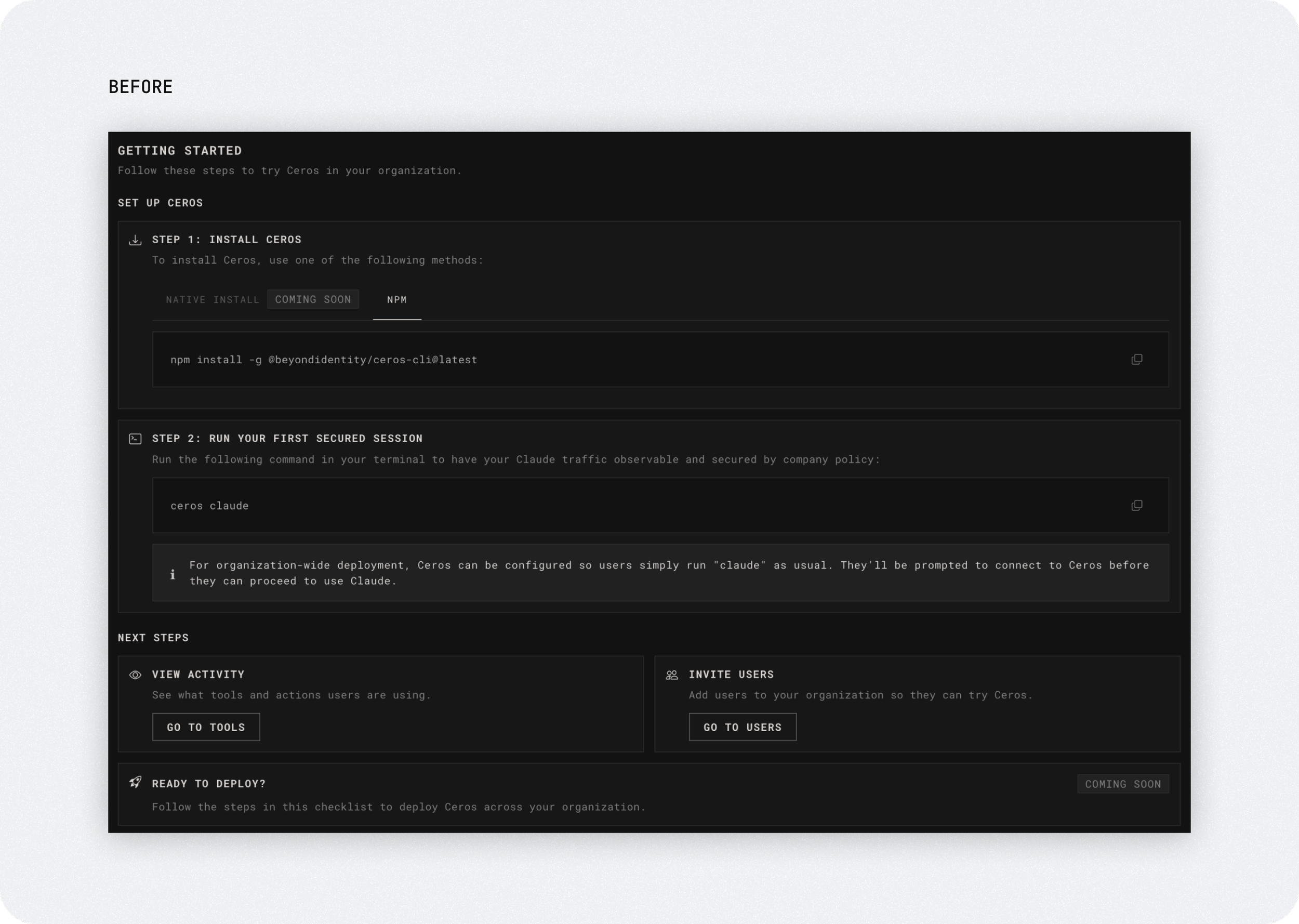
Users were not going through the getting started steps
Although there was a significant number of signs up, few users completed the initial setup needed to experience the product’s core value. I dug into research to understand why users were dropping off and what would motivate them to engage.
Users
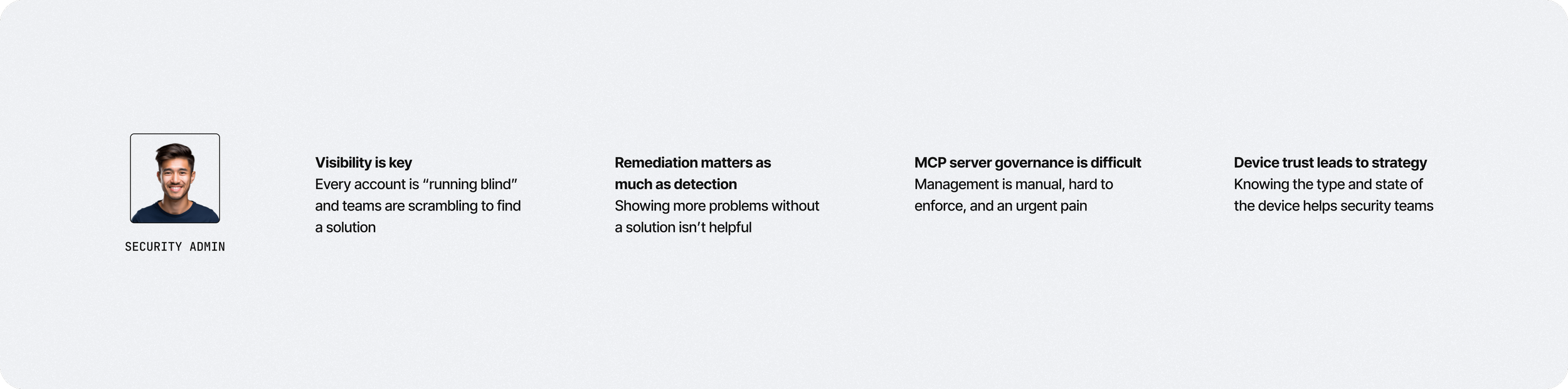
Security admins cared to see how we helped them manage AI usage in their organization
As AI adoption grew within organizations, security teams faced a real problem – they lacked visibility and control over what was happening inside their org, and it was happening at an escalating pace.
They had security compliance requirements to maintain, organizational data to protect, and they wanted a product that could help them manage this issue.
Designs
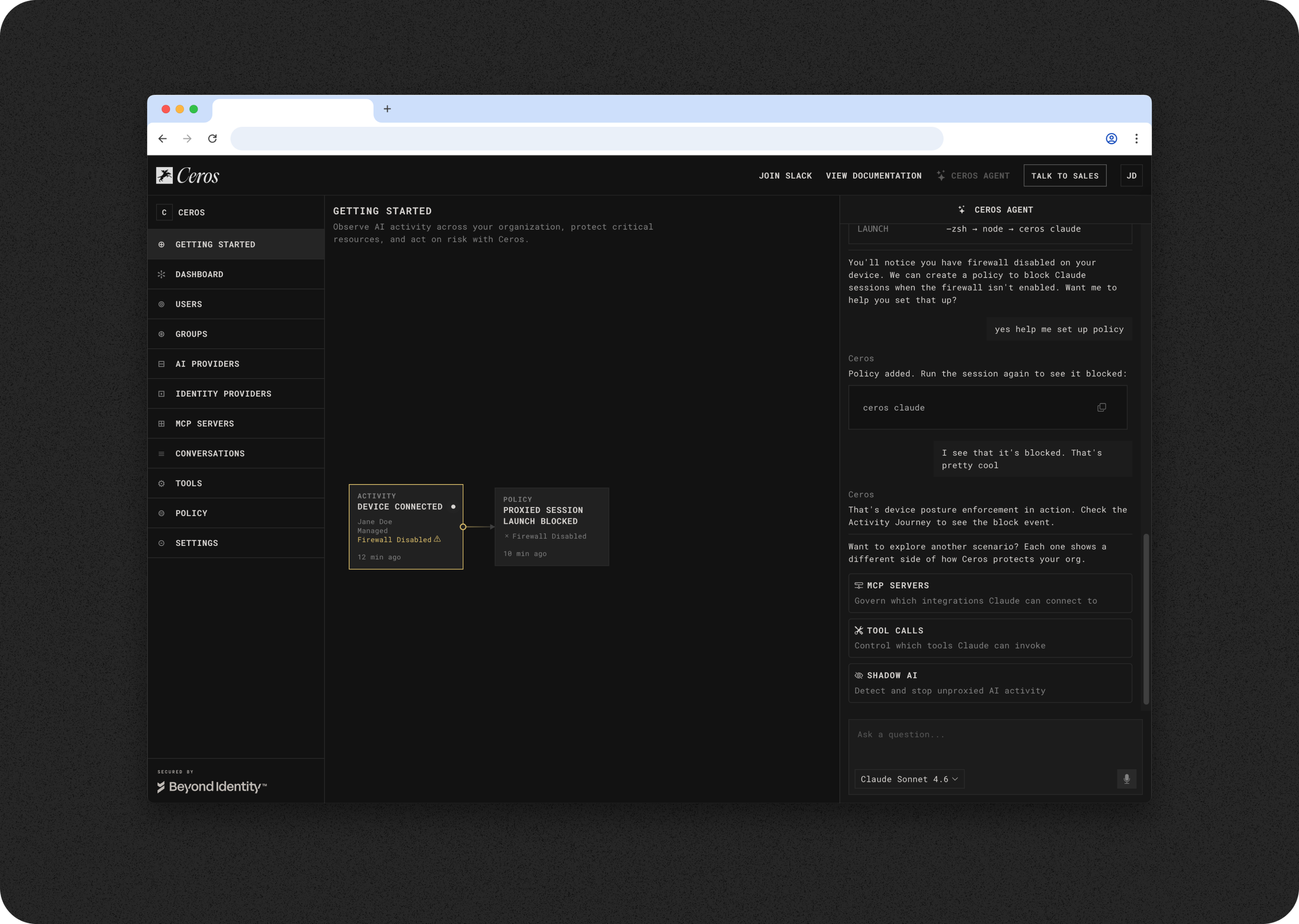
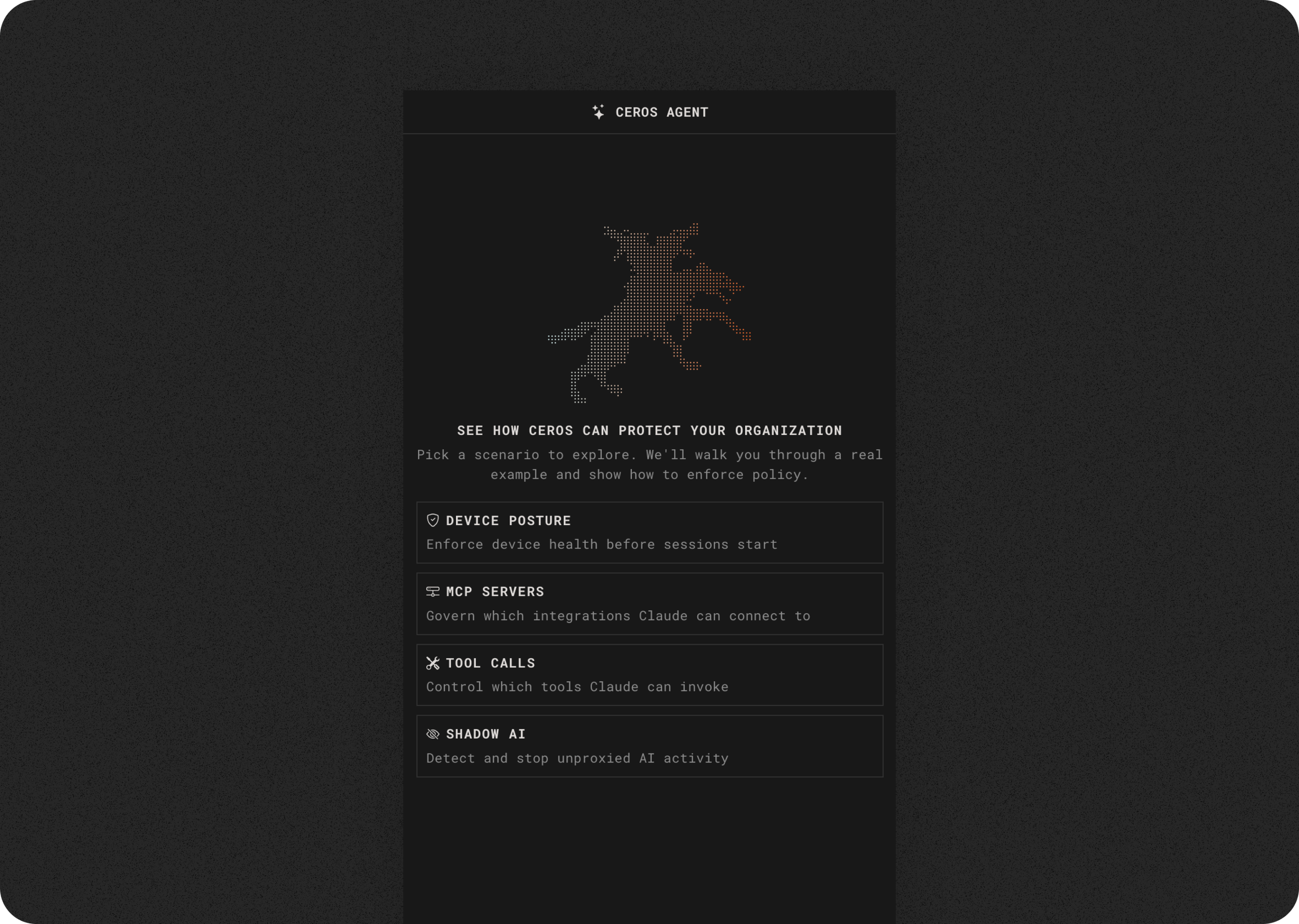
Agentic Chat Experience
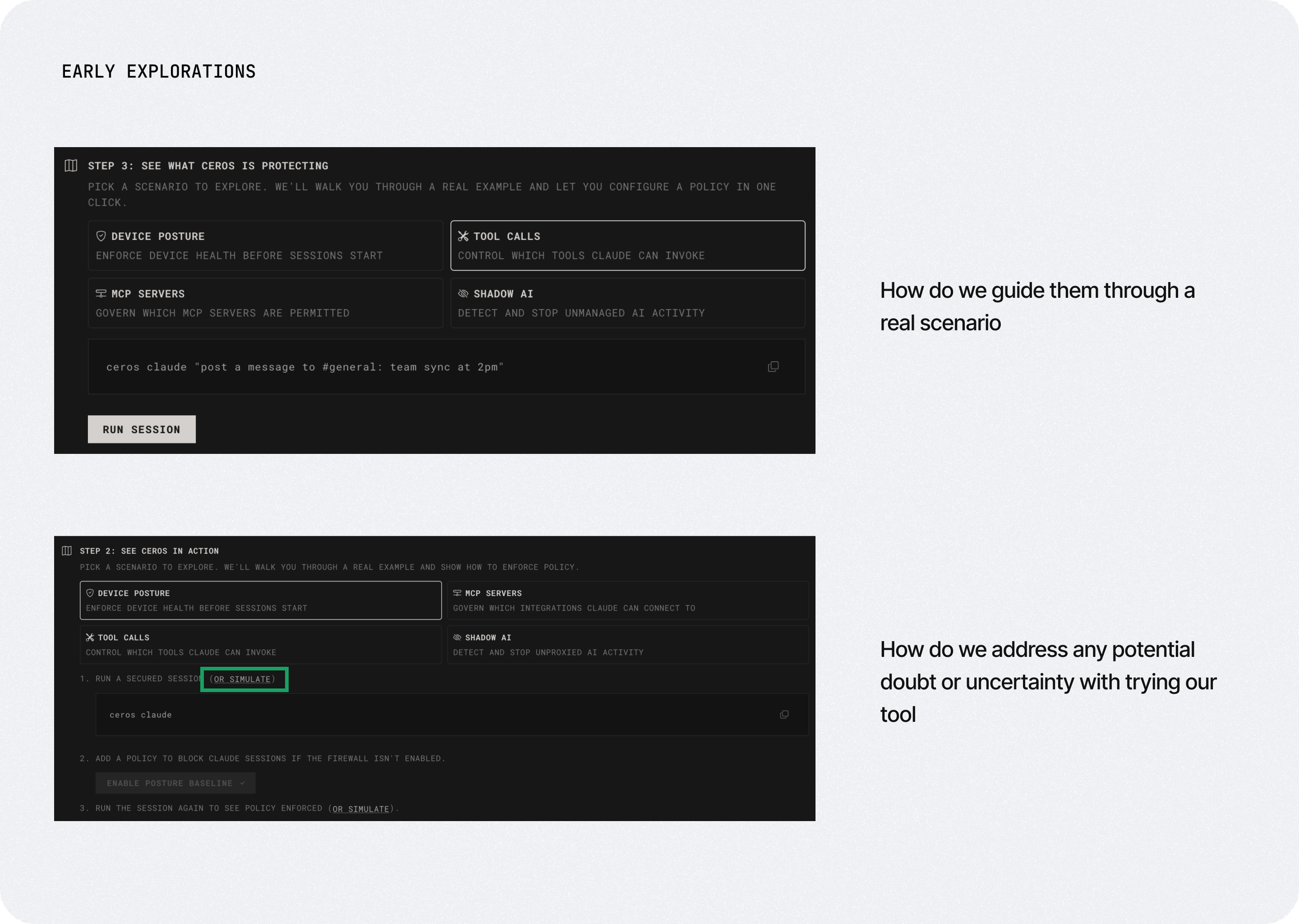
I learned that users had 4 primary use cases they wanted visibility over and focused on designing an experience that allowed them to try the ones that resonated most with them.
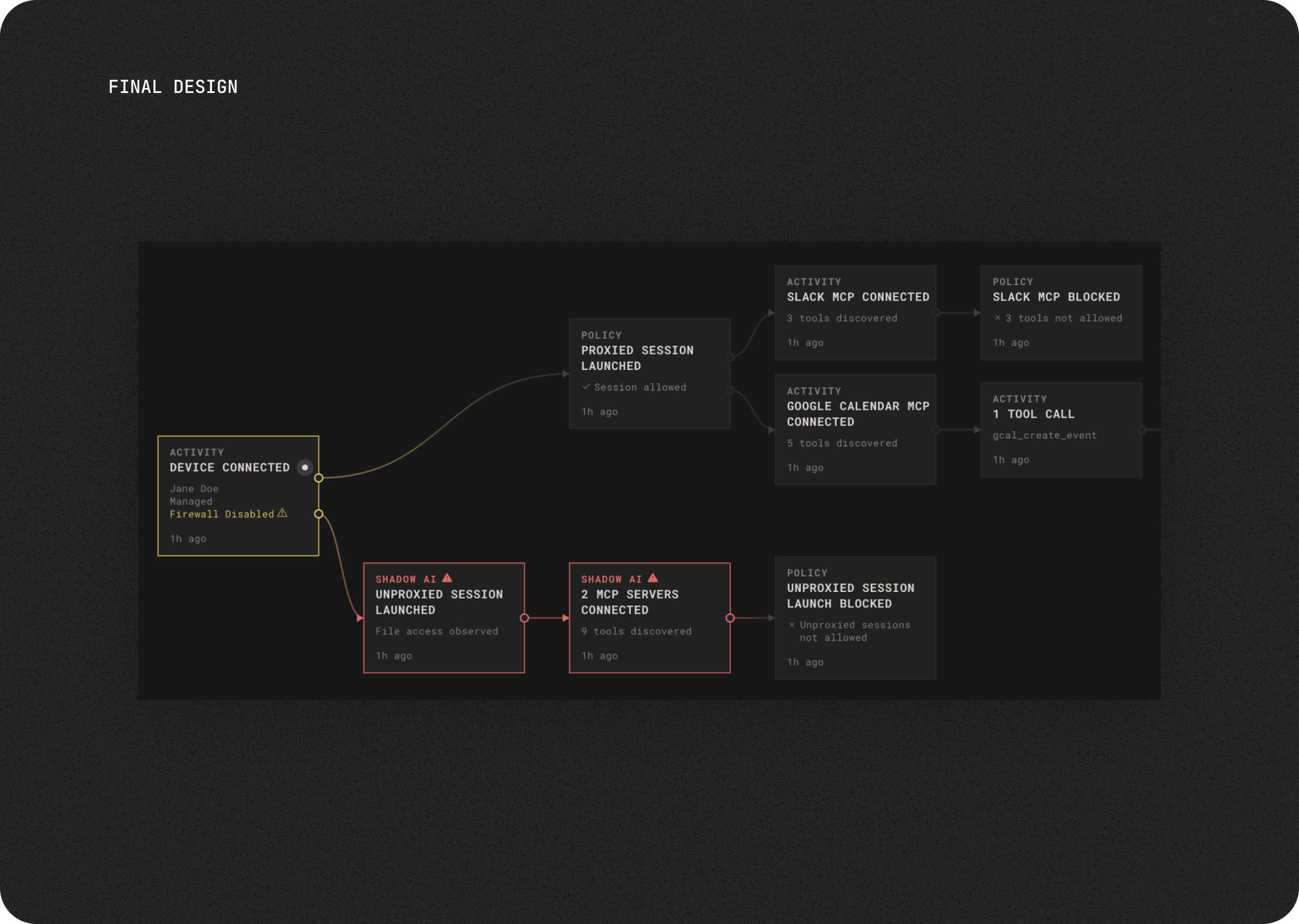
After exploring several options – from a pure terminal experience to a guided journey in the GUI, from real walkthroughs to a simulator – I proposed a chat experience with a journey visualizer that guides the user through a real scenario and established scalable patterns that could be used across the product.
These explorations helped build alignment on the problem and how we could meaningfully solve it.
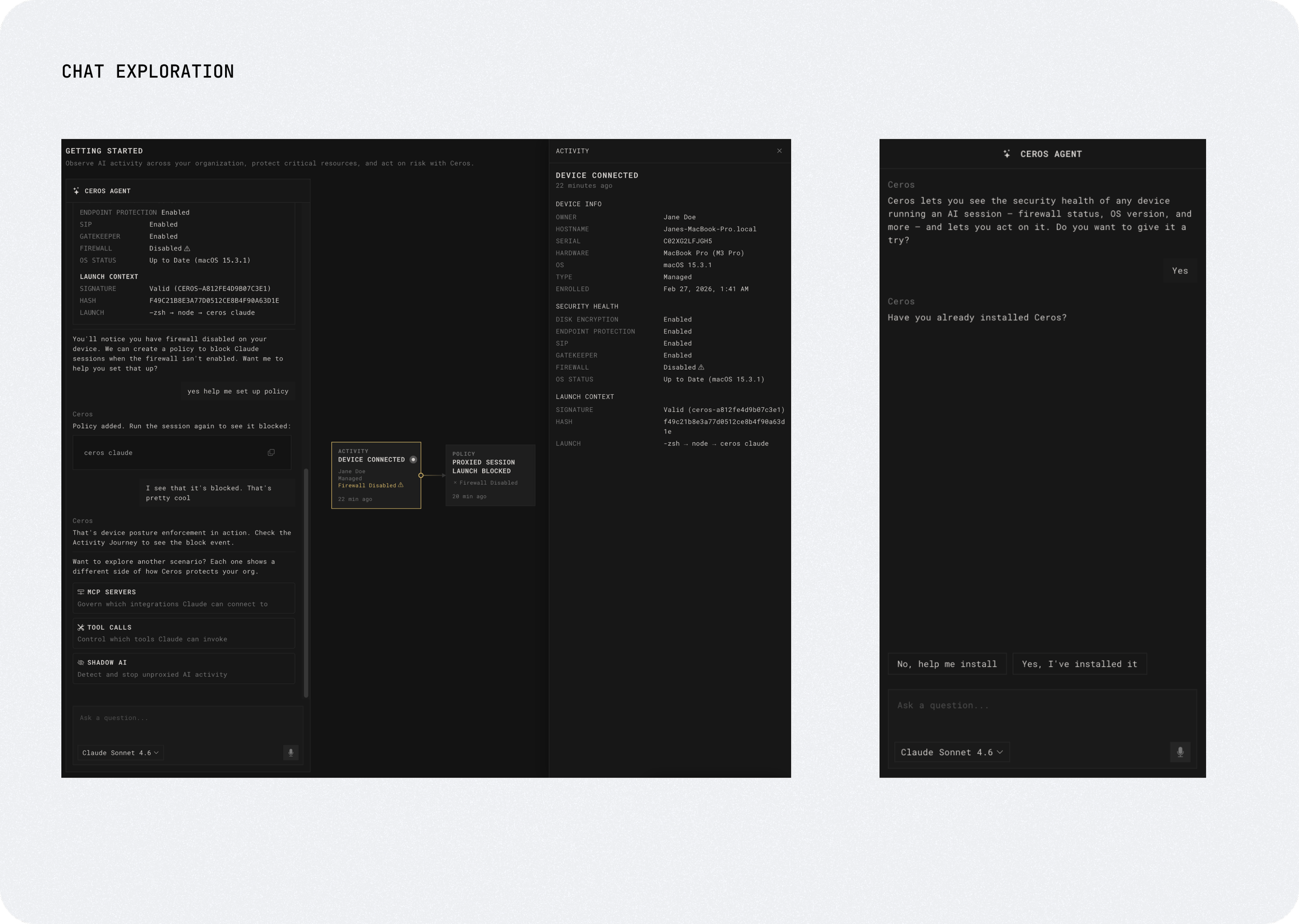
Final experience
Designs
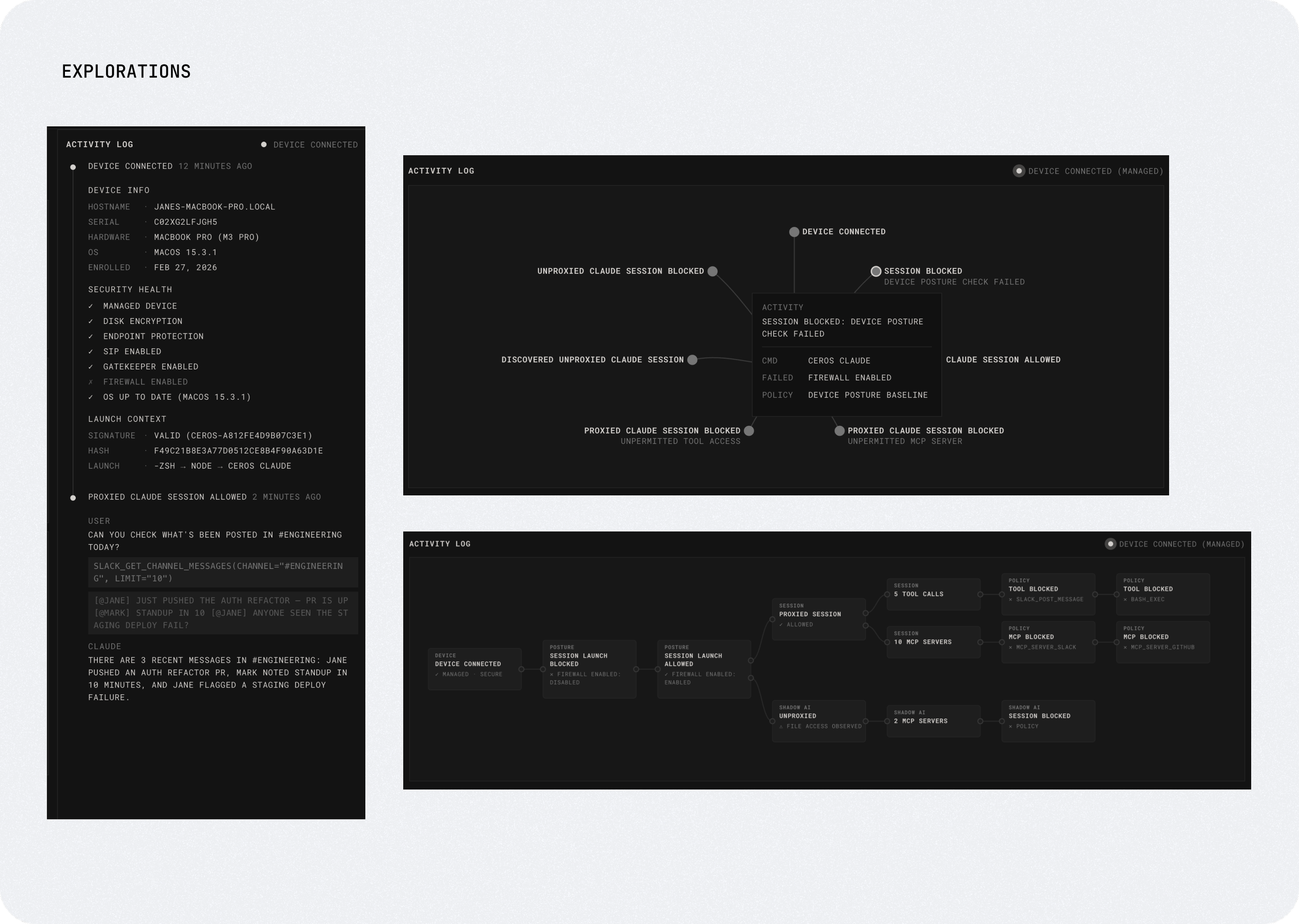
Journey Visualizer
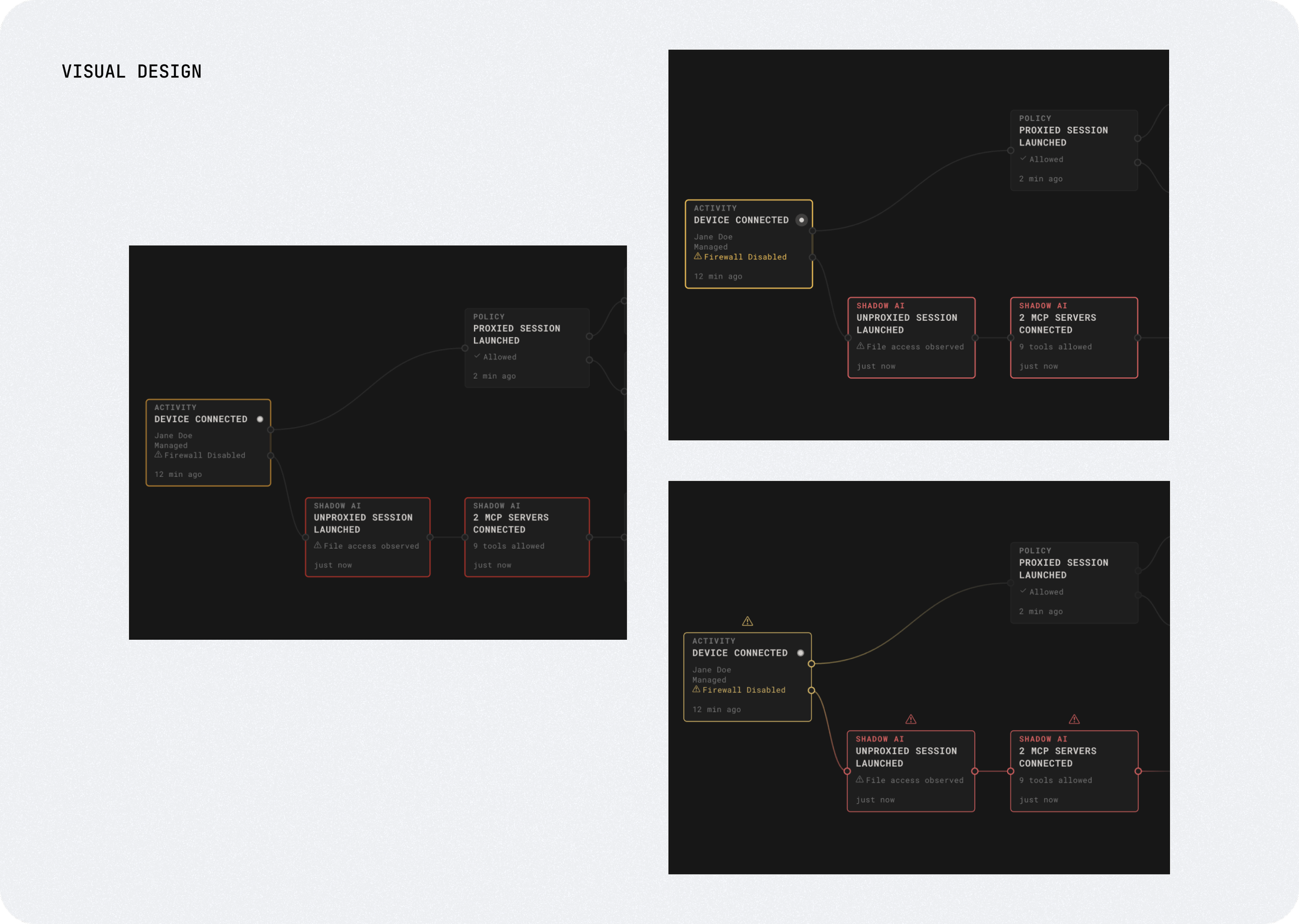
The journey visualizer was an effective way to help users understand how they would gain visibility into activity in their organization and whether remediation has occurred.
Creating this experience require a lot of collaboration to understand challenges and establish the logic of how the visualizer would display. We strategized how to best implement the whole experience, phasing it in to accommodate engineering constraints, while ensuring the delivery of an early aha moment for users.
results & learning
In the age of AI, flexibility and communication become crucial
My proposal elevated the problem and prioritization of this effort to address the business need.
In addition to that, our team used AI tools as a core part of the product development process. What I learned was that encouraging fast exploration and implementation while maintaining a cohesive, user-centered experience required clear communication, ongoing alignment, and thoughtful design leadership.